
If you've ever spent an hour scrolling a storefront trying to find a new indie game worth your time, you already know the problem PokeIndie is trying to solve. Most discovery feeds are built around algorithms tuned for whatever is already big, which is exactly backwards for indie games that live or die on word of mouth. PokeIndie's pitch is simple: independent games, ranked by real interest. Instead of engagement-bait metrics, the platform's core mechanic lets players "poke" a game they want others to discover, and that poke count, not ad spend or store placement, decides visibility.
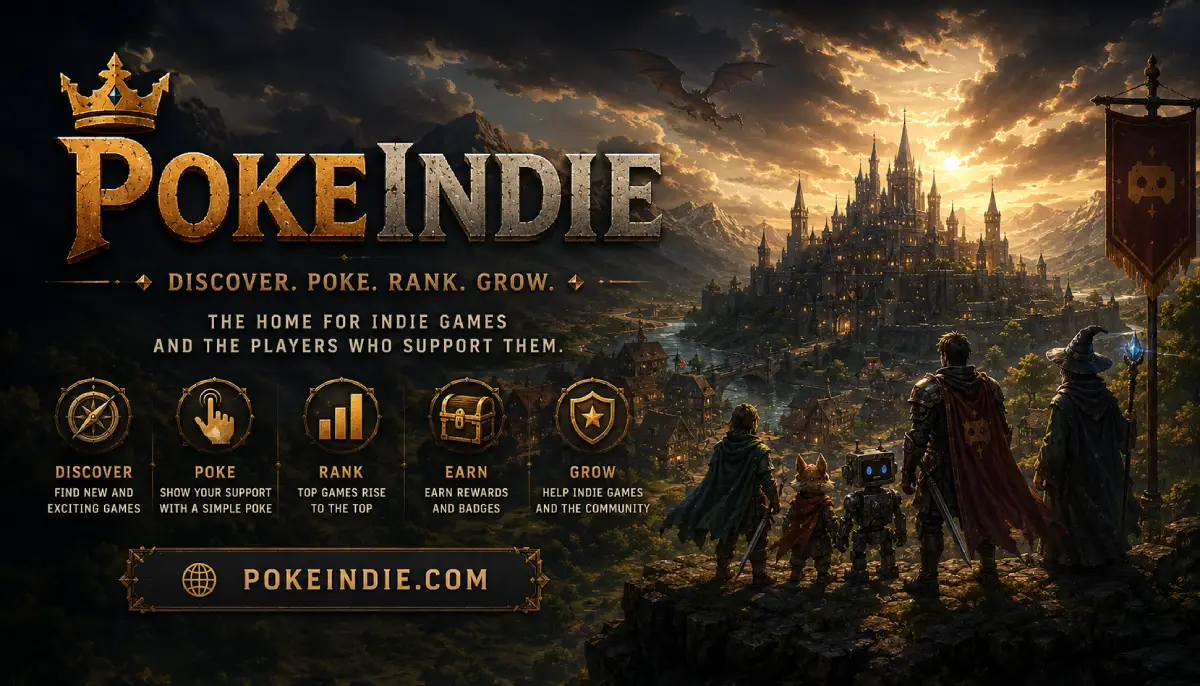
How the "Poke" System Works
Games on PokeIndie are organized into a few honest, low-friction views: trending titles with real recent momentum, fresh releases, recently updated games, and current sales. There's no pretense of a mysterious ranking formula, a game rises because players are actively telling the platform "more people should see this." For streamers specifically, that's a genuinely useful signal: a game with a growing poke count is, by definition, catching real attention right now, which makes it a low-risk pick for a "let's try something new" segment or a co-op night with your community.
Why This Matters for Streamers
A recurring problem for variety streamers is running out of games that feel worth featuring, big releases are oversaturated, and random storefront browsing is a time sink. PokeIndie's trending and recently-updated views are built for exactly that scouting use case. Some indie games blow up almost overnight, see how Megabonk turned a zero-budget release into a million sales, and being early to cover a title like that is worth far more to a channel than yet another AAA launch stream. It's also worth checking momentum before you commit airtime to a title: a quick look at whether a game is gaining or losing pokes tells you more about current community interest than a review score from two years ago.
Once you've picked a game, matching it with the right on-stream presentation helps it land. Browse StreamRSC's streaming overlays and scenes to theme your layout around whatever you're featuring, or grab a fresh alert set like Livespirits' animated 2D character alerts so the new game gets its own moment when someone follows or subs.
Why This Matters for Indie Devs
On the developer side, PokeIndie lets independent creators submit and publish their games directly, with integration documentation and analytics so you can see how your game is actually performing on the platform instead of guessing. There's also a premium tier aimed at teams that already have a server community (Discord, etc.) and want to connect that audience directly to their game page, along with deeper performance insights. Worth noting up front: PokeIndie is explicit that ranking integrity is maintained even for premium users, so it isn't a pay-to-rank scheme, it's closer to better tooling layered on top of the same community-driven ranking everyone else uses.
A Few Honest Caveats
PokeIndie is still a growing platform, and its current catalog leans toward browser-based and educational titles, strategy RPGs, puzzle games, and coding tutorials for kids, alongside the broader indie library. If you're a streamer expecting a AAA-adjacent back catalog, temper expectations; if you're a dev making something scrappy and browser-friendly, this is closer to home turf than most storefronts. It's also a reminder of why discovery platforms independent of a single storefront's rules are worth having at all, our piece on Steam's refund policy failing indie developers is a good example of how much indie devs are still at the mercy of platforms they don't control.
Where It Fits Alongside StreamRSC
We're mentioning PokeIndie here because it solves a real, specific problem for exactly the kind of streamer and indie-dev community StreamRSC is built for: finding games worth your community's time, and getting your own game in front of people who'll actually care. Read more about the platform's mission on its about page, and if you build overlays, widgets, or streaming tools for a game you found through PokeIndie, browse the rest of our gaming articles or share your own build in community tools.


