

For over a decade, Steam's refund policy has been praised as one of the most consumer-friendly systems in digital gaming. Players who purchase a game can generally request a refund within 14 days, provided they have played for less than two hours. The policy was introduced to protect consumers from broken releases, misleading marketing, and technical issues that prevent a game from functioning properly.
Few developers argue against consumer protection. If a game crashes, fails to launch, or simply does not deliver what was advertised, players absolutely deserve the ability to get their money back. However, recent events surrounding the indie title Paddle Paddle Paddle have exposed what many developers believe is a significant flaw in Valve's one-size-fits-all refund system.
A Game Players Loved... But Still Refunded
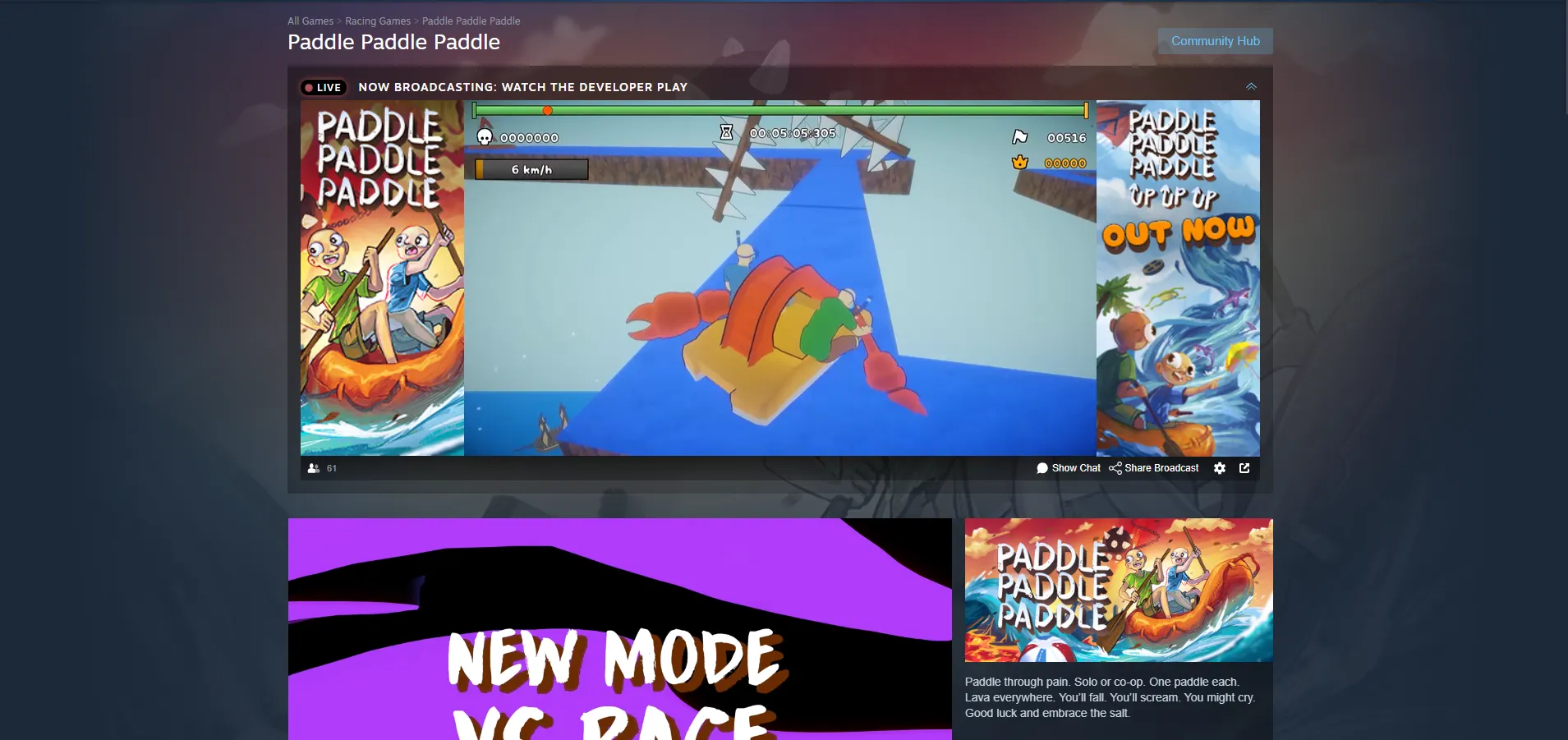
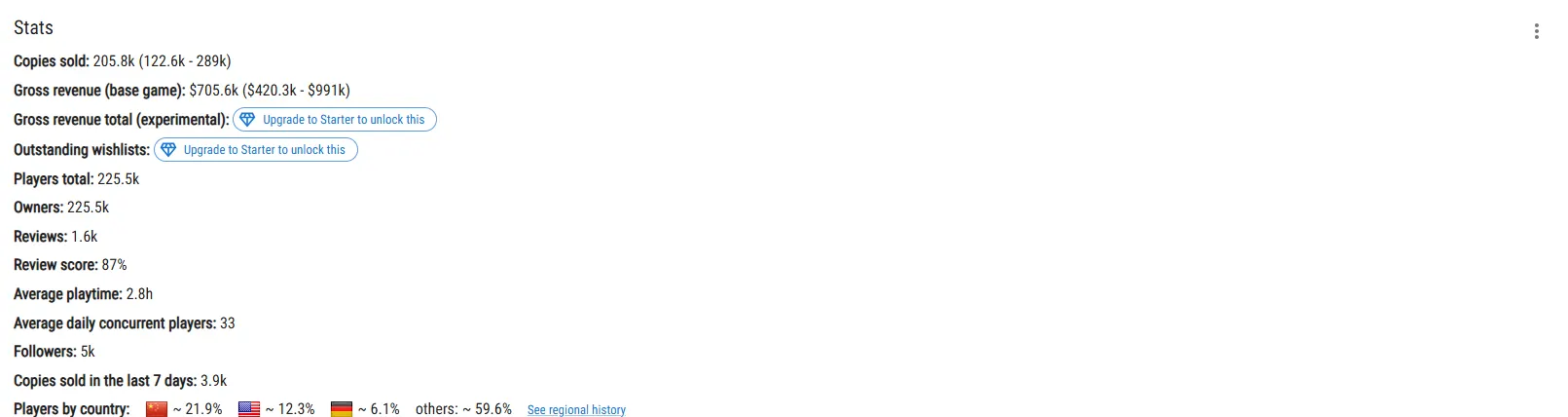
Solo developer Zoroarts recently shared statistics that quickly spread throughout the gaming community. According to the developer, Paddle Paddle Paddle maintains roughly a 90% Very Positive review score on Steam while simultaneously experiencing a reported 21% refund rate, representing more than 55,000 refunded purchases. These figures were published directly by the developer on X (formerly Twitter) and have since been reported by multiple gaming publications including GamesRadar and TechSpot .
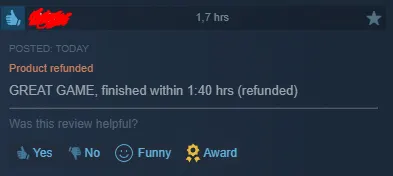
What made the situation particularly controversial wasn't simply the refund percentage. The developer shared examples of Steam reviews where players openly praised the game before requesting a refund. One review simply stated:
"GREAT GAME, finished within 1:40 hrs (refunded)."
Seeing a glowing recommendation immediately followed by a refund highlights the uncomfortable question at the center of this debate: if a customer genuinely enjoyed and completed the product, should they still be entitled to receive all of their money back?
The Two-Hour Rule Was Never Designed For Short Games
Steam's refund policy works exceptionally well for large AAA titles that require dozens of hours to complete. A player cannot realistically finish Elden Ring, Baldur's Gate 3, or Cyberpunk 2077 within two hours. The refund window simply gives buyers enough time to determine whether the game performs correctly and matches their expectations.
Short indie experiences are fundamentally different.
Many independent games intentionally deliver compact experiences lasting between one and four hours. Their value comes from artistic direction, storytelling, gameplay mechanics, replayability or cooperative experiences-not necessarily raw playtime.
Unfortunately, Steam applies exactly the same refund policy regardless of whether a game lasts two hours or two hundred.
That creates a situation where some short games can be fully experienced while the buyer remains eligible for an automatic refund.
Consumer Protection Shouldn't Become Free Access
The purpose of a refund system is consumer protection-not free rentals.
When a customer purchases a movie ticket, watches the entire film, and leaves the cinema satisfied, they cannot request their money back simply because the movie was only 90 minutes long.
The same principle applies to books, concerts, escape rooms and countless other forms of entertainment.
Completing and enjoying the entire experience generally means the transaction has fulfilled its purpose.
Not Every Refund Is Abuse
It is important to recognize that not every refund represents abuse of Steam's system.
Some players genuinely experience technical issues. Others discover the gameplay simply isn't for them. Multiplayer connectivity problems, accessibility concerns, or hardware incompatibilities are all perfectly legitimate reasons for requesting a refund.
Steam's refund policy exists because consumers deserve protection against those situations.
The concern raised by many indie developers is different: a blanket policy may unintentionally incentivize refunds even after the core experience has already been fully consumed.
Indie Developers Operate On Extremely Thin Margins
Large publishers can absorb refund spikes.
Solo developers often cannot.
Many independent creators spend years developing a single title, funding development out of their own savings while hoping launch sales will finance future updates-or simply allow them to continue making games.
If a significant percentage of buyers complete a short game before requesting refunds, the financial impact can be devastating even if the game itself is critically well received.
Ironically, Paddle Paddle Paddle demonstrates this perfectly. The controversy wasn't caused by poor reviews. Quite the opposite-the game received overwhelmingly positive feedback from players.
Could This Encourage Artificially Longer Games?
One unintended consequence of the current refund policy is that developers may feel pressured to artificially increase playtime simply to move players beyond the two-hour refund threshold.
That benefits nobody.
Instead of creating tightly designed experiences, developers could be incentivized to add repetitive objectives, unnecessary grinding, longer tutorials or slower progression purely to protect their revenue.
Games should be designed around creative vision-not refund mechanics.
Valve Has Better Options
The current system doesn't have to disappear entirely.
Instead, Valve could introduce smarter policies that continue protecting consumers while acknowledging that different games are built differently.
- Prevent automatic refunds once the main story has been completed.
- Display estimated completion time directly on every Steam store page.
- Introduce separate refund rules for intentionally short games.
- Allow developers to classify narrative or compact experiences.
- Require manual review for refunds submitted after significant achievement completion.
Interestingly, Zoroarts himself suggested that Steam display an estimated completion time directly on each game's store page, allowing buyers to make more informed purchasing decisions before purchasing rather than relying on the refund system afterward, as reported by TechSpot .
The Debate Extends Beyond One Game
Paddle Paddle Paddle is unlikely to be the last title to raise these concerns.
As more indie developers focus on polished, replayable experiences instead of lengthy campaigns, the limitations of a universal two-hour refund policy become increasingly apparent.
The discussion isn't about removing consumer rights. Those protections remain essential for the PC gaming ecosystem.
Rather, the conversation is about ensuring those protections don't unintentionally disadvantage honest developers whose games simply happen to be shorter than traditional AAA releases.
Final Thoughts
Steam's refund policy has undoubtedly improved consumer confidence over the years and has helped establish trust in digital game purchases. Yet the Paddle Paddle Paddle controversy illustrates that policies designed with good intentions can produce unintended consequences when applied universally.
If a player buys a game, enjoys it, completes it, recommends it publicly and then receives every penny back simply because they finished before an arbitrary timer expired, many developers understandably question whether the balance between consumer protection and creator protection has shifted too far.
Valve has built one of the world's greatest PC gaming platforms. Precisely because of that influence, it also has an opportunity to modernize a refund policy that was created more than a decade ago for a very different gaming landscape.
Whether Valve ultimately changes its policy remains to be seen. What is certain is that the Paddle Paddle Paddle debate has reopened an important discussion about how digital marketplaces should protect both the people who buy games and the people who dedicate years of their lives to creating them.


