

The “Make Millions with YouTube” Lie
How fake course sellers manipulate AdSense dashboards and why screenshots are one of the most abused tools in online marketing.
Over the past few years, I have seen the same promise repeated again and again across YouTube, Instagram, and TikTok: “All you need is a laptop and a phone to make thousands per day with YouTube.” The formula always sounds simple. Buy the course. Copy the method. Turn on ads. Watch the money flow in.
The problem is not YouTube itself. YouTube and AdSense are legitimate monetization platforms. The problem is the way some self-proclaimed “gurus” manipulate perception to sell expensive programs. And the most common weapon they use is the edited earnings screenshot.
The Classic Screenshot Strategy
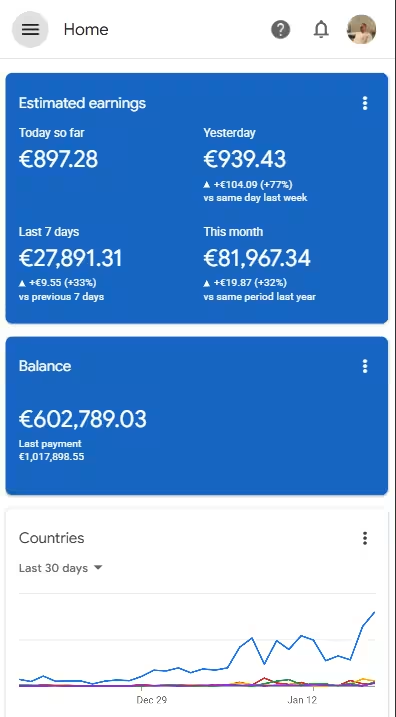
The typical sales pitch begins with proof. A dashboard showing €3,482.17 today. Another screenshot showing €28,000 this month. Sometimes even a recorded video scrolling through analytics pages.
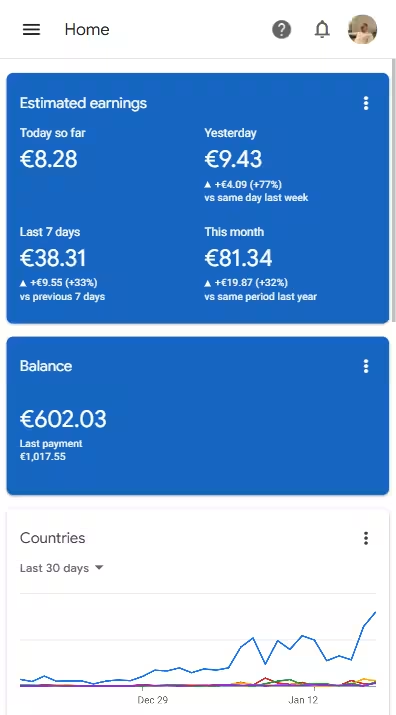
What most beginners do not realize is that modern browsers like Chrome or Edge include built-in Developer Tools. With a simple right-click and “Inspect,” anyone can edit the HTML text displayed on their screen. That means a person can change €8.28 into €897.28 in seconds without hacking anything or accessing real backend data.
The numbers look real because visually they are real. But they exist only in that local browser session. Once refreshed, the real numbers return. The screenshot, however, lives forever in ads, landing pages, and promotional videos.
Why This Tactic Works So Well
I have studied online marketing funnels for years, and this tactic works because it plays directly into predictable psychological triggers.
First, there is authority bias. When we see dashboards, graphs, and analytics panels, we subconsciously associate them with credibility and data. Numbers feel objective.
Second, there is fear of missing out. When someone claims they are making five figures per month with a “simple system,” it creates urgency. We start thinking that everyone else is getting rich while we are being left behind.
Third, there is the simplicity illusion. The message is always the same: no experience required, no technical skills, no risk, no long hours. Just follow the steps.
When you combine these psychological triggers with edited screenshots, it becomes a powerful sales engine for $297, $997, or even $4,997 mentorship programs.
The Reality of YouTube and AdSense Income
In reality, YouTube monetization is complex and highly variable. Revenue depends on niche, CPM rates, audience geography, seasonality, advertiser demand, and watch time. A finance channel targeting U.S. viewers can earn significantly more per thousand views than an entertainment channel targeting lower-CPM regions.
Even successful creators experience fluctuating monthly income. One month can be strong due to seasonal ad budgets. The next month can drop without warning. Sustainable growth usually takes years of consistent content production, audience building, and constant optimization.
The creators who build long-term income rarely rely on AdSense alone. They diversify with sponsorships, affiliate marketing, digital products, memberships, or services. The real strategy is building trust and delivering value, not exploiting algorithm “loopholes.”
How I Evaluate Income Claims
Before trusting any “make money online” offer, I look for verifiable transparency. That includes live screen recordings where the person refreshes the page, changes date ranges, and shows consistent historical performance.
I also check whether the channel itself is public and whether the content aligns with the claimed revenue. A small channel with minimal engagement but massive daily earnings should immediately raise questions.
Legitimate educators focus on process: keyword research, thumbnails, scripting, analytics interpretation, testing, and long-term iteration. They teach skills, not fantasies.
The Bigger Picture
YouTube is not a scam. AdSense is not fake. Online income is absolutely possible. I have seen creators build life-changing businesses through consistent effort and strategic execution.
What is misleading is the narrative of instant wealth with no expertise required. Screenshots can be edited. Dashboards can be staged. Luxury backgrounds can be rented for a day.
Real growth is slower, more technical, and far less glamorous. It involves testing thumbnails, improving click-through rate, optimizing retention graphs, analyzing traffic sources, and constantly refining content based on data.
The difference between success and disappointment is understanding that skills compound over time, while shortcuts are usually sold at a premium.
Final Thoughts
If you want to build income on YouTube, focus on creating value, understanding your audience, and mastering the platform’s fundamentals. Treat it like a real business, not a lottery ticket.
When you see dramatic earnings screenshots used as primary proof, pause and think critically. Sustainable online income is built through consistency, strategy, and credibility. Everything else is just a well-designed sales page.


