

Long before Discord servers, subreddit megathreads, and algorithm-driven feeds, my social media was a dusty chat window inside World of Warcraft. If you played Horde between levels 10 and 25 in the early days, you already know what I am talking about: The Barrens Chat. It was chaotic, unfiltered, often absurd, and somehow unforgettable. For many of us, it defined the golden age of WoW Classic and shaped early online gaming culture in ways we still reference today.
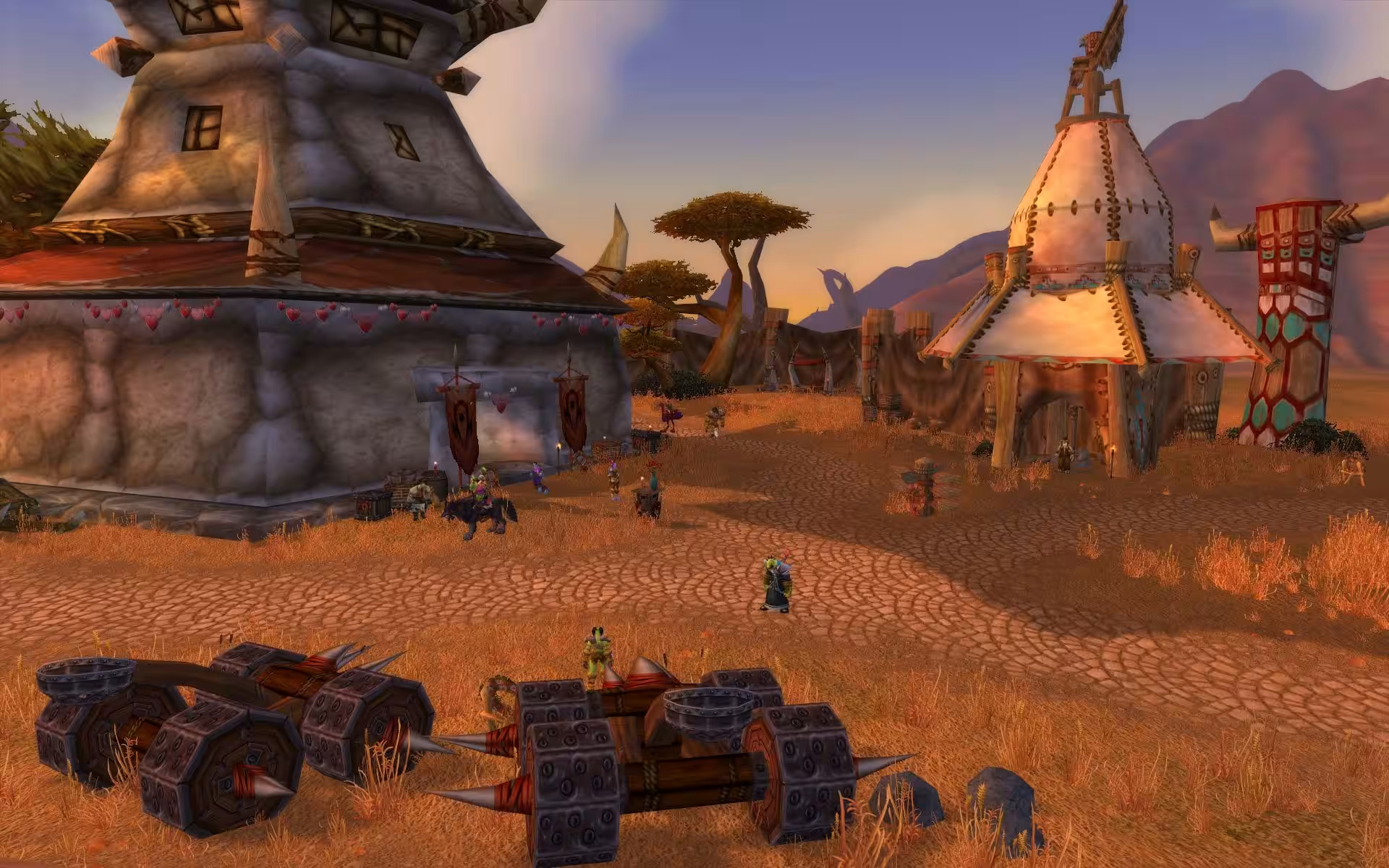
The Barrens was not just another leveling zone. It was a sprawling, sun-scorched stretch of land that forced Orcs, Trolls, and Tauren into the same space for dozens of hours. Because of its size and quest design, players lingered there far longer than expected. That concentration of thousands of players in one zone created a perfect storm for what became one of the most iconic general chat channels in MMORPG history.
Why The Barrens Became a Cultural Phenomenon
From a design perspective, The Barrens was enormous. Travel took time. Running from Camp Taurajo to the Crossroads felt like a marathon, especially before mounts were available. There were no convenient dungeon finders, no instant teleports, and no quest markers guiding every step. That downtime changed player behavior. Instead of tabbing out, many of us opened General Chat and started typing.
What followed was a constant scroll of jokes, arguments, bad advice, and occasional brilliance. Chuck Norris jokes were practically mandatory. Debates about class balance erupted hourly. Someone was always arguing about PvP. It was messy, but it was alive. In a strange way, The Barrens Chat became the Horde’s town square.
In The Barrens, leveling was only half the game. The other half was watching General Chat spiral into chaos.
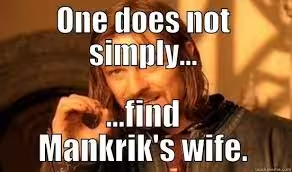
The Legendary Question: Where Is Mankrik’s Wife?
No discussion about Barrens Chat is complete without mentioning the infamous quest, Lost in Battle. Mankrik, an Orc warrior, asks you to find his wife, Olgra. The problem was not the quest itself, but the lack of direction. In early World of Warcraft, there were no quest markers or highlighted areas. You had to read the text carefully and explore.
Naturally, most players skipped the reading part and went straight to chat.
[1. General] PlayerOne: where is mankrik wife?
[1. General] HelpfulGuy: south of Crossroads, near the quillboars.
[1. General] TrollMage: try Stormwind.
The question repeated every few minutes, day and night. Over time, it stopped being a genuine request for help and became a meme. Even today, mentioning Mankrik’s wife instantly triggers nostalgia for veteran players. It represents a time when information was scarce and community interaction was necessary.
Did Somebody Say Thunderfury?
Another defining moment of WoW chat culture was the legendary item link spam: [Thunderfury, Blessed Blade of the Windseeker]. Originally, linking Thunderfury was a legitimate flex. It was one of the rarest and most prestigious weapons in the game, obtained through high-end raiding.
But as with many things in online communities, irony took over. One player would link the item. Another would respond with, “Did somebody say Thunderfury, Blessed Blade of the Windseeker?” Within seconds, the entire chat window would be filled with repeated item links. Trade chat, general chat, it did not matter. When a Thunderfury outbreak started, there was no stopping it.
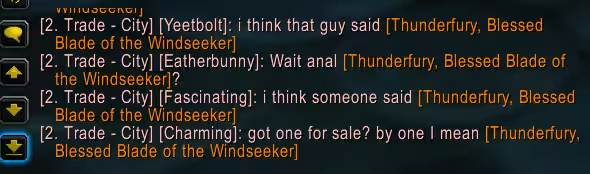
It was pointless. It was disruptive. It was hilarious. And it demonstrated something important about early MMORPG communities: players were not just consuming content, they were creating their own entertainment.
What Modern MMOs Lost
Today’s MMORPGs are efficient. We have group finders, optimized leveling paths, detailed online databases, and streamlined quest design. From a usability standpoint, that is a clear improvement. However, something intangible disappeared along the way.
The friction that once forced us to talk to each other is mostly gone. In The Barrens, confusion led to conversation. Long travel times led to jokes. Shared frustration led to shared identity. General Chat was unpredictable, sometimes toxic, often ridiculous, but undeniably communal.
The chaos of Barrens Chat was not a flaw in the system. It was a byproduct of thousands of players sharing the same digital space without filters.
The Lasting Legacy of Barrens Chat
When I log into WoW Classic today, the zone feels quieter. Players move efficiently from quest to quest, guided by add-ons and external resources. The magic of not knowing, of collectively figuring things out, is harder to find. Yet the legacy of Barrens Chat remains embedded in gaming culture.
Memes like Mankrik’s wife and Thunderfury link spam continue to surface across forums, streams, and social media. They are cultural artifacts from a time when online gaming felt raw and unscripted. For many of us, The Barrens was not just a leveling zone. It was our introduction to large-scale online communities.
Looking back, I do not miss the endless corpse runs or the painfully slow travel speed. But I do miss opening General Chat and never knowing what I was about to read. That unpredictability, that shared absurdity, made The Barrens Chat more than just text on a screen. It made it a defining chapter in MMORPG history.
If you ever find yourself leveling through WoW Classic again, take a moment to glance at General Chat. Even if it is quieter now, you might still catch a familiar question echoing across the savannah: “Where is Mankrik’s wife?”
For more deep dives into gaming history, guides, and World of Warcraft nostalgia, explore more articles on streamrsc.com.


